Learning Games for Toddlers: Complete Guide to Boosting Development Through Play
Table of Contents
Why Learning Games Matter for Toddler Development
Science-Backed Benefits of Game-Based Learning
Screen-Based Learning Games for Toddlers
Screen-Free Learning Games for Toddlers
How to Choose the Right Games for Your Child
Tips for Maximizing Learning Through Play
Why Learning Games Matter for Toddler Development
Toddlers—from 18 months through age 3—are in one of the most critical periods for brain development. During these formative years, learning happens rapidly through exploration, experimentation, and play. While traditional teaching methods work for older children, toddlers thrive when learning is embedded in enjoyable, interactive experiences.
Learning games bridge the gap between fun and education. They transform what could feel like structured “lessons” into engaging activities that toddlers genuinely enjoy—which means they’re more likely to participate actively, retain information longer, and develop positive associations with learning itself.
The key difference between passive entertainment and true learning games lies in interactivity. A toddler watching a cartoon is passively consuming content; a toddler playing with a shape-sorter toy is actively problem-solving, building hand-eye coordination, and learning spatial relationships. That’s the power of well-designed learning games.
Parents often ask whether screen-based games or screen-free activities are better. The answer isn’t either-or. The most effective approach combines both: using high-quality educational apps during limited, structured screen time while prioritizing hands-on, screen-free play as the foundation of your child’s day.
Science-Backed Benefits of Game-Based Learning
Cognitive Development
A comprehensive meta-analysis of game-based learning in early childhood education found that games produce a moderate to large positive effect on cognitive development. Children who engaged with learning games showed improvements in problem-solving abilities, memory retention, and attention span compared to control groups.
This makes sense neurologically. When a toddler plays a matching game, their brain is simultaneously:
- Recognizing visual patterns
- Holding information in working memory
- Developing executive function skills (planning, decision-making)
- Building neural pathways for future learning
Even simple activities like stacking blocks teach foundational concepts: cause and effect (the tower falls), spatial awareness (how pieces relate to each other), and persistence (trying again after failure).
Social and Emotional Development
Games aren’t purely cognitive exercises. They’re social experiences that teach critical life skills. When toddlers play games with parents or peers, they practice:
Turn-taking: Understanding that others have needs and opportunities equal to their own
Communication: Expressing ideas, asking for help, and responding to others
Emotional regulation: Managing frustration when losing or struggling with a challenge
Empathy: Recognizing others’ emotions and responding appropriately
Research shows game-based learning produces moderate effects on social development and emotional development in young children. Group games and cooperative activities are particularly powerful for building these skills because they require real-time social navigation.
Motivation and Engagement
One of the most valuable findings from learning game research is its impact on motivation. Games provide what psychologists call “autonomy, competence, and relatedness”—three fundamental human needs.
Autonomy: Toddlers make choices within the game (which piece to place next, how to solve a problem)
Competence: Games provide immediate feedback and achievable challenges, creating a sense of mastery
Relatedness: Shared games strengthen bonds with parents and peers
This intrinsic motivation is far more powerful than external rewards. A toddler who loves playing shape-sorters will naturally spend time practicing, which accelerates learning without coercion.
Brain Development Benefits
During the toddler years, the brain is forming millions of neural connections daily. Play-based learning stimulates this development across multiple brain regions:
Language centers: Talking during games, hearing new words, and engaging in conversation
Motor cortex: Fine and gross motor practice through hands-on manipulation
Prefrontal cortex: Executive function, planning, and decision-making
Emotional centers: Processing feelings and social experiences
Unlike passive screen viewing, active play encourages real-world problem-solving. A child watching someone build a tower on a screen gains no tactile understanding of balance, weight, or spatial relationships. A child actually stacking blocks develops these skills through trial and error—a vastly more powerful learning mechanism.
Screen-Based Learning Games for Toddlers
While screen time should be limited for toddlers under 3, quality educational apps and digital games can supplement hands-on learning when chosen carefully. Here are the most effective options:
ABC Reading Eggs Junior (Ages 2–4)
Best for: Early literacy skills and foundational letter knowledge
ABC Reading Eggs Junior was created by educators with over 30 years of experience in early childhood development. The program combines:
Colorful, engaging animations and characters
Reward systems that motivate continued learning
Access to 250+ read-aloud books carefully selected for toddlers
Video content focusing on phonemic awareness and alphabet knowledge
Interactive activities with manageable difficulty progression
What makes this program effective is its ability to break up lessons with songs and visual rewards, keeping toddlers engaged without overwhelming them. The curriculum teaches both letter recognition and letter sounds—essential building blocks for reading readiness.
ABC Mouse (Ages 2–8)
Best for: Comprehensive early learning across multiple subjects
ABC Mouse offers thousands of activities spanning literacy, math, science, and social-emotional learning. The platform includes:
Interactive activities organized by age level
Video content and games
Progress tracking for parents
Songs and animations featuring familiar characters
Flexible pacing (self-paced learning)
Pricing: Free trial month, then $15/month or $45/year
The comprehensive nature of ABC Mouse makes it valuable for parents wanting all-in-one educational coverage, though some may prefer apps with deeper focus on single skill areas.
Sago Mini School (Ages 2–5)
Best for: Creative problem-solving combined with imaginative play
Sago Mini School blends educational content with imaginative gameplay. Users progress through increasingly challenging problem-solving activities while engaging with colorful characters and environments. The app seamlessly combines:
Progressive cognitive challenges
Imaginative, open-ended play
Educational videos
Skill development in pattern recognition and logic
What parents appreciate: The balance between structured learning and creative freedom. Toddlers aren’t just answering questions; they’re exploring, experimenting, and discovering solutions.
PBS KIDS Games (Free App)
Best for: Ad-free, curriculum-aligned learning
PBS KIDS offers a collection of mini-games featuring characters from trusted programming (Daniel Tiger, Sesame Street, etc.). Benefits include:
Completely free with no ads
No in-app purchases
Curriculum alignment with early learning standards
Familiar characters children recognize from quality television
Multiple skill focuses: letters, numbers, problem-solving
Osmo Starter Kit (Ages 3–5)
Best for: Bridging physical and digital learning
Osmo is unique in its “phygital” approach—combining physical game pieces with digital iPad gameplay. The system includes:
A special base and mirror that lets an iPad “see” and interact with tangible pieces
Games like ABCs, Squiggle (drawing), and Tangram (spatial puzzles)
Activities requiring actual hand manipulation while receiving digital feedback
This hybrid approach addresses a key limitation of pure digital games: toddlers gain tactile, hands-on experience while still benefiting from interactive digital engagement.
Elmo ABC & Elmo 123 (Ages 2–3)
Best for: First introduction to letters and numbers
These Sesame Workshop apps are specifically designed for the youngest learners. Features include:
Games featuring counting and number tracing
Basic addition and subtraction concepts
Colorful, engaging characters
Age-appropriate pacing
What makes these valuable: The character familiarity combined with intentional early learning design. Many parents report their 2-year-olds staying engaged with these apps longer than generic games.
Duolingo ABC (Ages 3–6)
Best for: Comprehensive, gamified literacy development
Duolingo ABC uses the same engaging, game-based approach that made Duolingo popular for language learning. The app focuses on:
Letter recognition and letter sounds
Initial word building
Reading simple three-letter words
Consistent, short sessions (15-20 minutes)
Parent testimonials frequently mention that children progress from not recognizing letters to reading recognizable words within 6 months of regular use.
Screen-Free Learning Games for Toddlers
While digital options have their place, screen-free games form the foundation of healthy toddler development. These activities offer tactile, sensory, and social benefits digital games cannot replicate.
Building and Construction Games
Why they matter: Building develops spatial reasoning, fine motor skills, and persistence.
Best options for toddlers:
Mega Bloks or Duplo: Large, easy-to-grip blocks perfect for toddlers. Focus on stacking, knocking down, and building simple structures.
Magnetic tiles (e.g., Magna-Tiles): Colorful magnetic blocks that snap together, offering different construction possibilities than traditional blocks.
Wooden blocks: Classic building toys available in various sizes and shapes.
Learning benefits: Cause and effect, spatial awareness, gross and fine motor coordination, problem-solving (“How do I make this tower taller?”), persistence through trial and error.
Pro tip: Building with your toddler amplifies benefits. Narrate what you’re doing (“I’m placing the red block on top of the blue block”), ask questions (“What happens if we add more blocks?”), and celebrate attempts, not just successes.
Puzzle Games
Why they matter: Puzzles systematically develop cognitive skills and shape recognition.
Best options for toddlers:
Large-piece puzzles (6-12 pieces): Age-appropriate for 2-3 year-olds.
Shape sorters: Boxes with shape-matching holes that toddlers manipulate pieces through.
Chunky wooden puzzles: Thick puzzle pieces with handles, often featuring animals or objects toddlers recognize.
Peg boards: Boards with holes where toddlers place pegs or shapes, developing hand-eye coordination.
Learning benefits: Problem-solving, spatial reasoning, hand-eye coordination, fine motor skills, patience, shape recognition, persistence.
Difficulty progression: Start with 4-6 piece puzzles and simple shape sorters, progressing to 12+ piece puzzles as skills develop.
Sensory Games and Play Stations
Why they matter: Sensory experiences are foundational for brain development. Sensory play stimulates multiple senses simultaneously, creating rich neural pathways.
Best sensory activities for toddlers:
Playdough stations: Unlimited creative potential while developing fine motor strength. Add cookie cutters, rolling pins, and other tools.
Rice and sand play: Pour rice or kinetic sand between containers, bury small toys, use measuring cups and scoops. (Always supervise for safety.)
Water play: Fill shallow containers with water, add cups, funnels, and floating toys. Develops cause-and-effect understanding and sensory awareness.
Texture exploration: Collect items with different textures (soft blankets, bumpy pine cones, smooth stones) for toddlers to touch and explore.
Learning benefits: Fine motor development, sensory integration, creativity, cause-and-effect understanding, calm and focus.
Board Games and Card Games
Why they matter: Structured games teach turn-taking, following rules, and patience—social skills crucial for group settings.
Best games for toddlers:
Counting Mountain (Orchard Toys): Players move game pieces up a mountain by counting footprints on cards. Simple, visually engaging, and teaches counting.
Skillmatics Brain Games: Includes 12 repeatable activities on double-sided mats, focusing on logic and problem-solving with colorful, engaging visuals.
First Orchard (Haba): A cooperative game where players work together to harvest fruit before the crow reaches the orchard. Teaches cooperation and basic color matching.
Simple matching games: Create your own matching games using photos or drawings of familiar objects.
Learning benefits: Turn-taking, following rules, patience, emotional regulation, cooperation, counting (depending on the game), color recognition.
Pretend Play and Role-Playing Games
Why they matter: Imaginative play develops language, problem-solving, emotional regulation, and creativity—cognitive skills that transfer to academic learning.
Best pretend play activities for toddlers:
Tea party: Set up a simple tea service with play dishes, plastic cups, and toys as “guests.” Toddlers practice social scripts and hospitality.
Doctor’s office: With toy stethoscopes and bandages, toddlers practice caretaking and explore emotions like fear through play.
Kitchen and cooking: Pretend cooking with play food develops vocabulary, understanding of sequences (“First we get eggs, then we crack them…”), and fine motor skills.
Animal role-play: Act out animal behaviors, make animal sounds, and move like different creatures. Combines physical play with imaginative exploration.
Simple dress-up: Large scarves, hats, and safe costume pieces let toddlers explore different roles and identities.
Learning benefits: Language development, social-emotional understanding, creativity, problem-solving, emotional processing through play.
Music and Movement Games
Why they matter: Music activates multiple brain regions simultaneously, while movement develops gross motor skills and spatial awareness.
Best music and movement activities for toddlers:
Freeze dance: Play music, dance together, and freeze when music stops. Develops listening skills, gross motor control, and turn-taking.
Simple instruments: Provide age-safe instruments (shakers, drums, xylophones) for free exploration.
Action songs: Sing familiar songs with accompanying movements (like “If You’re Happy and You Know It”).
Dancing together: No structure needed—just music and movement.
Learning benefits: Listening skills, gross motor development, rhythm understanding, memory, emotional expression, bonding with caregivers.
Obstacle Courses and Physical Play
Why they matter: Gross motor development is foundational for all later physical skills and confidence.
Best obstacle course ideas:
Pillows and cushions: Create a landscape to climb over and around.
Soft tunnel: Toddlers crawl through, developing spatial awareness and motor confidence.
Tape lines: Mark lines on the floor for toddlers to walk along, developing balance.
Outdoor natural obstacles: Logs to climb, grass to run through, hills to explore.
Learning benefits: Gross motor skills, balance, spatial awareness, body confidence, problem-solving (“How do I get over this?”), persistence.
How to Choose the Right Games for Your Child
Not all learning games are created equal, and not every game works for every toddler. Here’s how to choose wisely:
Consider Your Child’s Age and Stage
The same game won’t engage a 18-month-old and a 3-year-old. Developmentally:
18-24 months: Prefer cause-and-effect games, simple stacking, basic sensory play, large puzzles (4-6 pieces), peekaboo games
2-3 years: Ready for more complex puzzles (8-12 pieces), simple board games, pretend play, music and movement, obstacle courses
3 years+: Can handle turn-taking, simple rule-based games, more complex pretend play scenarios, beginning math and literacy games
Balance Screen Time and Screen-Free Play
The American Academy of Pediatrics recommends:
Under 2 years: Avoid screens except video chatting
2-3 years: Limit to high-quality programming, 15-30 minutes daily maximum
3+ years: Consistent limits with preference for co-viewing or interactive apps
For most families, this means screen-free games should comprise 80-90% of playtime, with quality educational apps used strategically during challenging times (meal prep, travel) or as occasional supplements.
Evaluate Game Quality
For digital games, look for:
Minimal distracting ads or in-app purchases
Clear educational purpose tied to developmental milestones
Interactive elements (not passively watched)
Age-appropriate difficulty progression
Safe, secure platforms (check privacy policies)
For physical games, look for:
Appropriate for your child’s current abilities with room to grow
Safe materials (no choking hazards for kids under 3)
Durability (toddler-proof construction)
Open-ended possibilities (more valuable than single-use games)
Appeal to your family’s values and interests
Pay Attention to Your Child’s Response
The best game is one your child actually enjoys. Some toddlers are instantly drawn to puzzles; others prefer physical play. Some light up with digital games; others lose interest quickly.
Observe:
Does your child choose to return to this game?
Are they engaged (actively playing, problem-solving) or passive (just watching)?
Does it match their current developmental level?
Are they showing genuine enjoyment or frustration?
These observations guide smarter choices over time.
Tips for Maximizing Learning Through Play
1. Play Alongside Your Child
Parental involvement dramatically multiplies the learning value of any game. When you play with your toddler, you:
Model engagement and enthusiasm: Your excitement makes learning feel important
Provide scaffolding: Help your child do the next challenging thing (“Let’s try putting this piece in…want help?”)
Narrate learning: Describe what’s happening, building vocabulary (“You’re stacking the blue block on the red block!”)
Create connection: Shared play strengthens your bond while they learn
Offer guidance: Gently redirect without taking over
Research shows guided play—where an adult participates and provides gentle structure—produces greater learning gains than either unguided play or direct instruction alone.
2. Create a Supportive Learning Environment
Physical space:
Designate a play area free of clutter and distractions
Keep games accessible so your child can choose independently
Ensure safety (no choking hazards, proper supervision)
Emotional environment:
Encourage exploration and experimentation, not just “right answers”
Celebrate effort and persistence, not just success (“You kept trying—that’s great learning!”)
Allow struggle; resist jumping in to solve problems immediately
Play without pressure—it’s about enjoyment first, learning second
3. Rotate Games Regularly
Toddlers lose interest in the same game after weeks or months. Rotating games keeps novelty high. Store some games away and reintroduce them after a break—they’ll feel brand new.
This strategy also:
Prevents excessive screen time (apps also benefit from rotation)
Extends the value of your game collection
Keeps your toddler’s interest varied and sustained
4. Follow Your Child’s Lead
Within safe boundaries, let your toddler direct their play. If they want to stack blocks instead of solving the puzzle, that’s valuable learning too. If they’re more interested in the sensory feel of playdough than making specific shapes, that’s learning.
Child-led play often produces more engagement and deeper learning than adult-directed activities.
5. Limit Screen Time Strategically
If you’re using digital games:
Set clear time limits beforehand (15-20 minutes is typical)
Use them strategically (during meal prep, before bedtime wind-down) rather than whenever requested
Co-engage when possible—sit nearby and ask questions about what they’re doing
Avoid screens at least 1-2 hours before bedtime (blue light interferes with sleep)
Ensure your child has far more screen-free time than screen time
6. Expect and Normalize Mistakes
Toddlers learn through trial and error. A puzzle piece that doesn’t fit, a tower that falls, losing a game—these aren’t failures, they’re learning opportunities. Normalize mistakes:
“The piece didn’t fit that way. Let’s try a different way.”
“Your tower fell! That happens. Want to build it again?”
“You didn’t win this round. Want to play again?”
This approach builds resilience and a growth mindset—the belief that abilities develop through practice.
7. Extend Learning Beyond Games
The best learning games are springboards for broader exploration:
After a puzzle: Explore similar shapes in your environment (“Look, that window is a rectangle, like in our puzzle!”)
After a pretend play session: Read related stories or visit real-world versions (pretending to cook leads to actual cooking together)
After a movement game: Notice and name movements throughout your day (“You’re jumping, just like in our freeze dance game!”)
Conclusion: Play as the Foundation of Learning
Learning games for toddlers aren’t extras or supplements—they’re the primary mechanism through which toddlers develop cognitive, social, emotional, and physical abilities. Research consistently demonstrates that well-designed games and play create better learning outcomes than formal instruction for young children.
The most effective approach combines:
Screen-free games as the foundation (80-90% of playtime)
High-quality digital apps used strategically and in limited amounts
Parental engagement that multiplies the value of any game
Variety across different types of games and skills
Child-led exploration with gentle adult guidance
Whether you choose puzzles, building blocks, digital apps, sensory play, board games, or imaginative pretend play, the common denominator is engagement, joy, and active learning. When toddlers genuinely enjoy an activity, learning happens naturally—not because an adult forced it, but because curiosity and fun are the most powerful motivators.
Start where your child is, follow their interests, and remember: the goal isn’t raising the smartest toddler, but raising one who loves learning. Games make that possible while creating memories that last a lifetime.
About The Kids Blog
The Kids Blog is your trusted resource for toy recommendations, product reviews, and parenting insights. We review products with families in mind, focusing on developmental benefits, safety, and genuine value. Whether you’re searching for the perfect learning game or trying to navigate the overwhelming world of children’s products, we’re here to help.











Recent Boy Toys
-
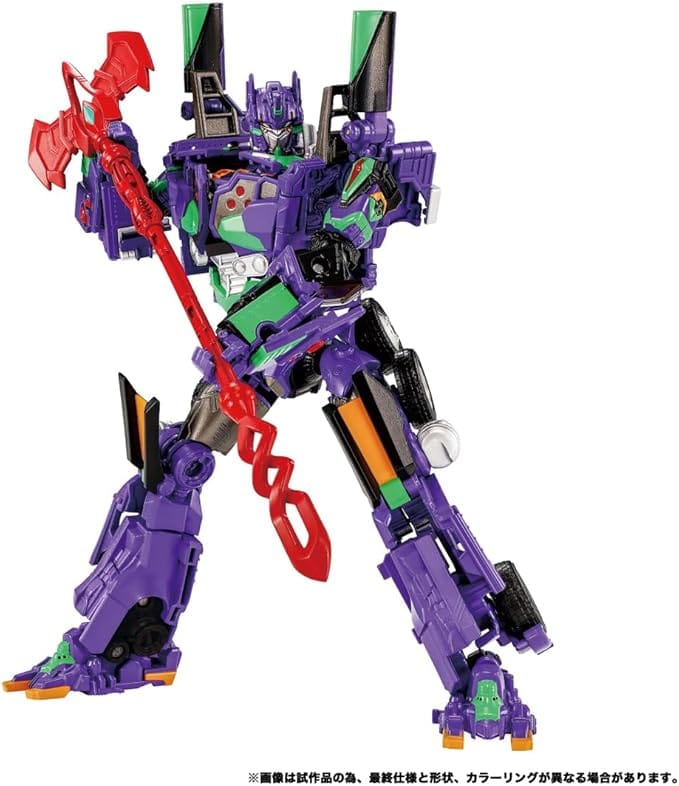
 Takara Tomy T-Spark Transformers Evangelion Prime Unit-01
 -
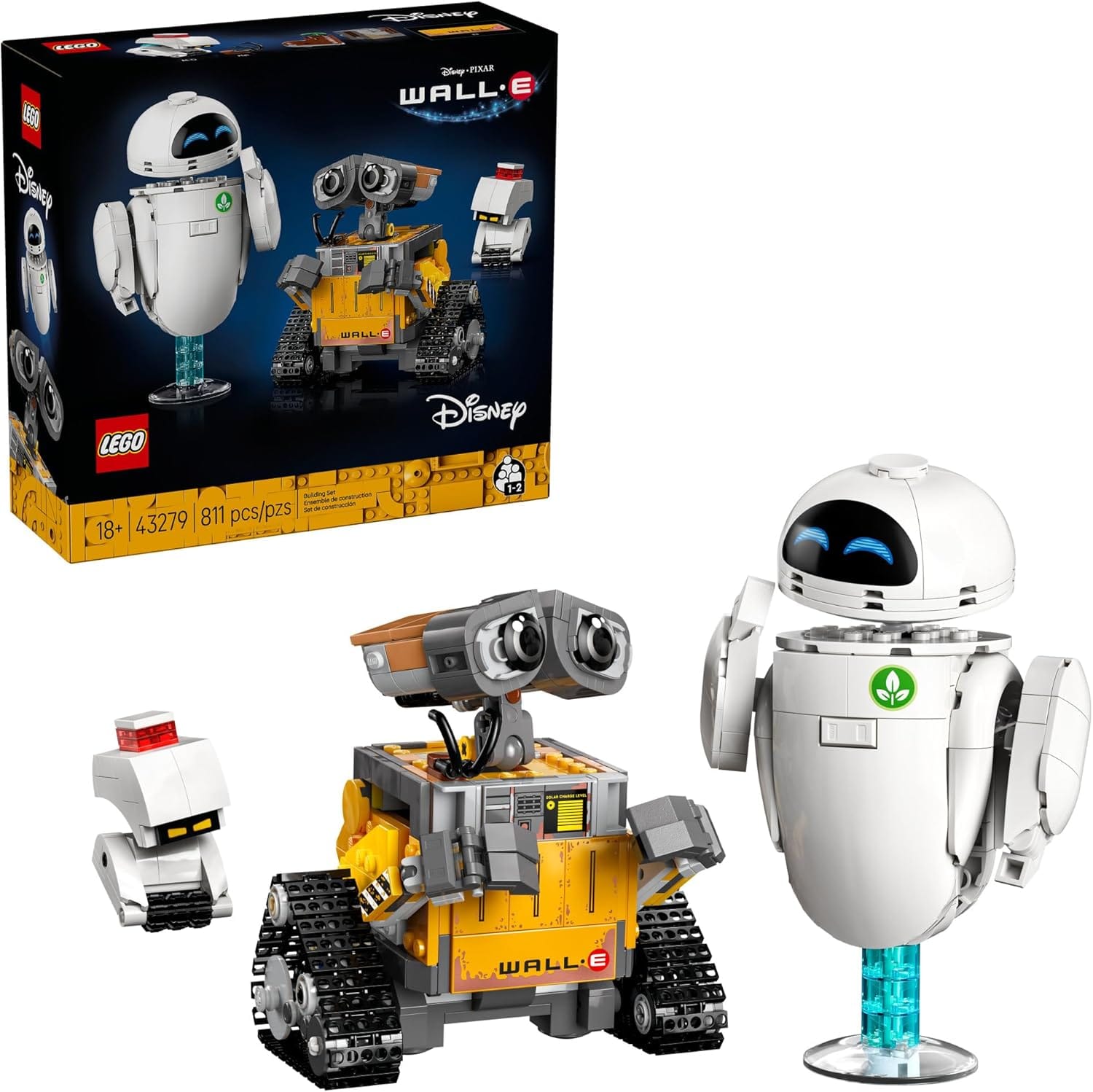
LEGO Disney & Pixar Wall-E & EVE Building Set
-
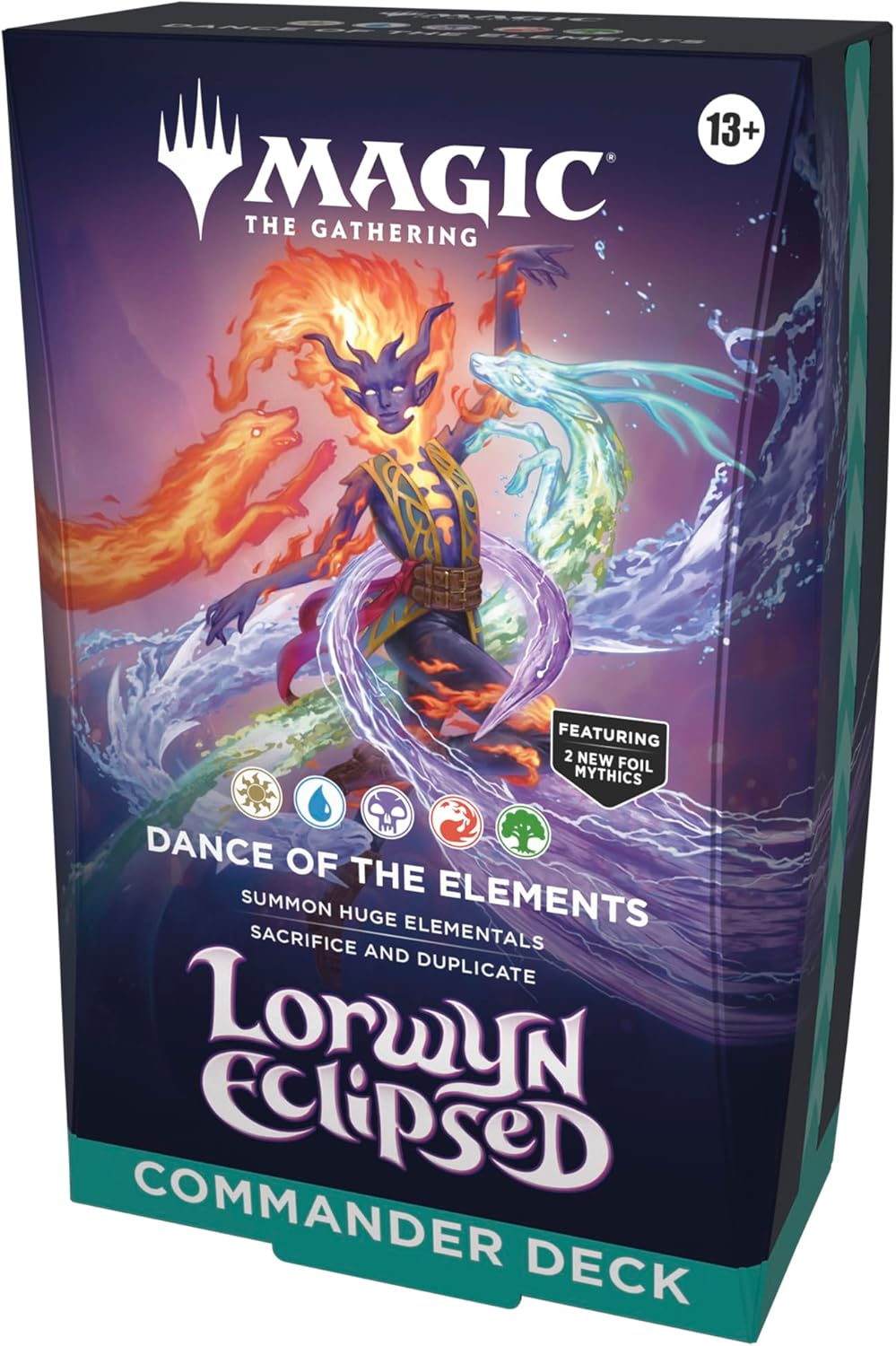
The Gathering Lorwyn Eclipsed Commander Decks (Dance of the Elements & Blight Curse)
-
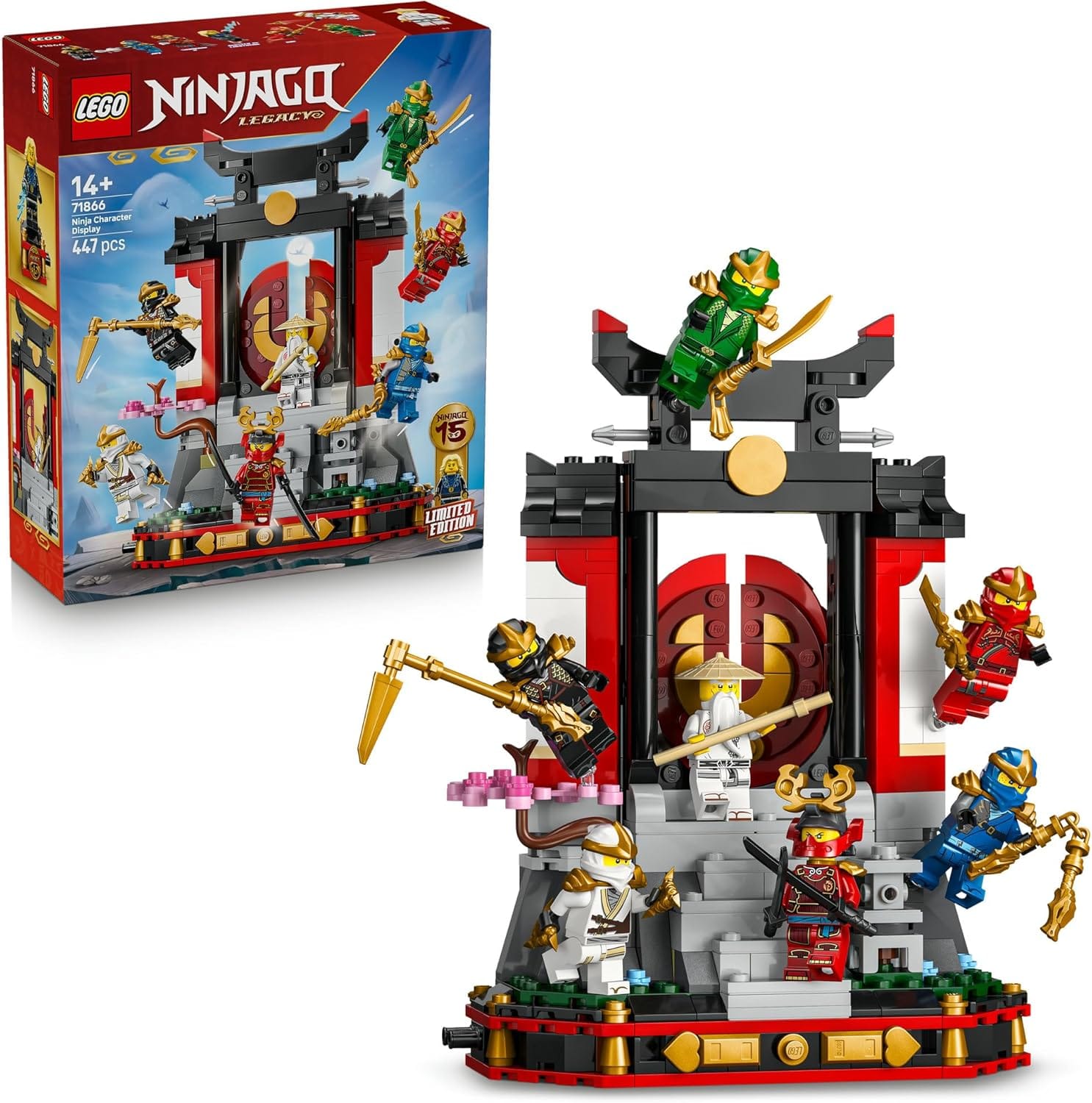
LEGO NINJAGO Ninja Character Display 15th Anniversary (71866)
-
LEGO Speed Champions Time Machine from Back to the Future