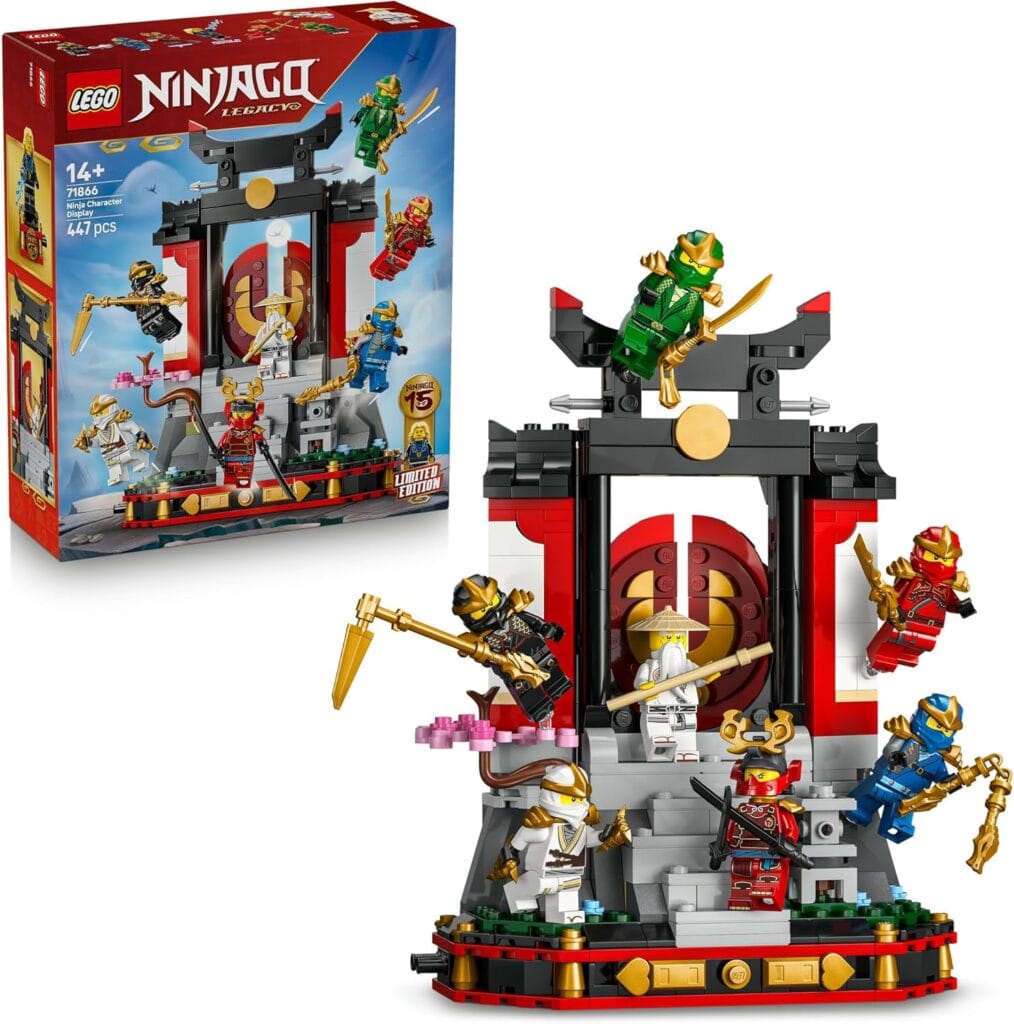
LEGO NINJAGO Ninja Character Display 15th Anniversary (71866)

TL;DR: LEGO NINJAGO Ninja Character Display 15th Anniversary (71866) is a premium collector’s celebration featuring eight exclusive minifigures representing the legacy ninjas across 15 years. With 508 pieces, an engineered display stand, detailed accessory ecosystem, and iconic character roster (Kai, Jay, Cole, Zane, Lloyd, Nya, Pixal, Sensei Wu), it delivers nostalgia and collectibility at AUD $99.99. Perfect for NINJAGO enthusiasts ages 14+. Highly recommended for dedicated collectors. Where to Buy Buy on Amazon Australia As an Amazon Associate, we earn from qualifying purchases. Prices and availability subject to change. Released in January 2026, the LEGO NINJAGO Ninja Character Display 15th Anniversary (Set 71866) marks a milestone celebration of the legendary ninja-themed franchise that captivated audiences across multiple animated series, films, and building experiences. Rather than constructing an action vehicle or elaborate playset, this 508-piece set ($99.99 AUD / $69.99 USD) dedicates itself entirely to commemorating the characters who defined NINJAGO’s 15-year legacy. The set features eight exclusive minifigures representing the core ninja roster: Kai (fire master), Jay (lightning master), Cole (earth master), Zane (ice master), Lloyd (green ninja/golden ninja), Nya (water master), Pixal (AI-turned-ninja), and Sensei Wu (wise mentor). Rather than generic “anniversary edition” repaints, each figure features newly designed costumes reflecting their canonical appearances across NINJAGO’s evolution. The engineering centerpiece is a sophisticated display stand designed to showcase all eight ninjas with individualized platforms, lighting considerations, and backdrop options. This comprehensive review examines whether this character-focused set justifies its premium positioning, evaluates the minifigure quality and exclusivity, and determines its appeal for NINJAGO enthusiasts and collectors. LEGO NINJAGO Ninja Character Display 15th Anniversary (71866) Breakdown What You Get: The set contains 508 pieces distributed across five numbered bags, arriving in LEGO’s premium packaging reflecting the celebratory nature. The primary product is an engineered display stand measuring approximately 45cm wide, 30cm deep, and 25cm tall in full configuration. Eight exclusive minifigures (detailed below) arrive pre-assembled, eliminating the need for minifigure “building” while focusing attention entirely on stand construction. Accessories include individually themed elements for each ninja (Kai’s fire elements, Jay’s lightning effects, Cole’s earth details, etc.), backdrop panels featuring NINJAGO iconography and anniversary messaging, and integrated lighting infrastructure enabling optional LED integration (LED elements sold separately). The instruction booklets include character retrospectives documenting each ninja’s evolution across NINJAGO’s 15-year timeline. Eight Exclusive Minifigures and Character Authenticity: The set’s defining feature is the roster of exclusive minifigures, each representing a ninja character with newly designed costumes unavailable elsewhere. Kai features his evolved fire ninja appearance with updated printing reflecting series progression; Jay displays his lightning master outfit with new face printing capturing his comedic personality; Cole showcases earth ninja aesthetics with reinforced armor detailing; Zane presents his ice ninja form with crystalline accents unique to this set. Lloyd arrives in his iconic golden ninja configuration representing his ultimate power form. Nya features her water master costume with sophisticated printing reflecting her warrior evolution. Pixal displays her AI-turned-ninja integration with unique printing unavailable in previous sets. Sensei Wu, the mentoring constant across the franchise, features anniversary-specific printing reflecting his 15-year journey. Each minifigure employs dual-sided face printing enabling expression variation—critical for display scenarios where personality variation matters. The diversity of costume designs and character roles ensures visual variety preventing monotonous roster appearance. Display Stand Engineering and Architecture: The stand represents sophisticated structural engineering prioritizing visual presentation over playability. Eight individual raised platforms, graduated in height from approximately 8cm to 18cm, enable each ninja positioning at eye-catching elevation variations preventing clustered, visually confusing presentation. The platforms employ subtle architectural details—each platform features thematic coloring matching that ninja’s elemental association (red for Kai, blue for Jay, brown/tan for Cole, white for Zane, gold for Lloyd, teal for Nya, purple for Pixal, and gray for Sensei Wu). Backdrop panels feature NINJAGO iconography including the iconic dojo architecture, ancient symbols, and “15 Years” anniversary messaging. The structural framework employs interlocking Technic elements ensuring stability despite the graduated platform arrangement and weight distribution of eight standing minifigures. Lighting Infrastructure and Optional Integration: A sophisticated feature often overlooked is the internal infrastructure enabling optional LED lighting. Pre-installed channels within the stand allow mounting of compatible LED strips (sold separately through LEGO’s lighting system compatible with Speed Champions and other display sets). The transparency of certain architectural elements—particularly the backdrop panels featuring gradient effects—enables backlighting to transform evening display appearance substantially. Many collectors source third-party LED solutions (approximately AUD $20-$40) that integrate seamlessly, transforming the stand from daytime presentation to dramatically illuminated showcase piece evening display. Build Experience and Construction Progression: The 508-piece build progresses logically across approximately 4-6 hours of focused construction, making it accessible for 14+ age recommendation without requiring intermediate adult assistance. The sequential bag organization provides clear progression: early bags establish the foundational framework and platform base, middle bags introduce the graduated elevation system, and final bags complete the architectural backdrop and decorative elements. Unlike action-focused sets, the construction emphasizes stability testing—builders verify each platform’s load-bearing capacity before proceeding, creating educational value regarding structural engineering. The logical progression prevents frustration while maintaining consistent engagement; the lack of complex mechanical systems (compared to vehicle-focused sets) compensates through nuanced architectural details. Collectibility and Minifigure Exclusivity: The eight exclusive minifigures create compelling collector motivation. NINJAGO enthusiasts maintaining comprehensive minifigure collections recognize that certain variant costumes appear exclusively within specific sets, rendering comprehensive collection completion impossible without acquisition. This set’s eight exclusive designs—particularly Pixal’s anniversary costume and Sensei Wu’s 15-year commemorative appearance—will likely appear nowhere else, establishing long-term collector value. The rarity economics suggest that post-retirement (potentially 12-18 months after release), secondary market pricing will appreciate 20-40% above MSRP as collectors seek completion. For dedicated NINJAGO fans, the set becomes obligatory rather than optional for collection integrity. Display Presence and Shelf Impact: Positioned on dedicated display furniture or shelving, the completed stand commands attention through its substantial footprint and elevation variation. The 45cm width occupies significant horizontal space; collectors require appropriate furniture accommodating this dimension. However, the visual payoff justifies spatial investment: eight ninjas arrayed at graduated heights

LEGO NINJAGO Ninja Character Display 15th Anniversary (71866) Read More »

LEGO Speed Champions Time Machine from Back to the Future

TL;DR: LEGO Speed Champions Time Machine from Back to the Future (77256) is an exceptional licensed tribute set that captures the iconic DeLorean with remarkable fidelity in compact 357-piece form. With dual configurations (lightning-strike mode and flying Mr. Fusion mode), authentic film details, and iconic minifigures (Doc Brown and Marty McFly), it delivers nostalgic satisfaction for fans and engaging building for ages 9+. At AUD $49.99-$59.99, excellent value for a nostalgic license. Highly recommended for fans and builders alike. Where to Buy Buy on Amazon Australia As an Amazon Associate, we earn from qualifying purchases. Prices and availability subject to change. Released in January 2026 as part of LEGO’s Speed Champions line, the Time Machine from Back to the Future (Set 77256) arrives as the long-awaited Speed Champions interpretation of cinema’s most iconic time-traveling automobile: the DeLorean DMC-12. For over a decade, fans have awaited a Speed Champions-scale DeLorean to sit alongside the collection’s extensive catalogue of legendary vehicles. This 357-piece set ($49.99-$59.99 AUD / $39.99-$44.99 USD) delivers precisely that—a compact, detailed recreation of the beloved fictional machine from Robert Zemeckis’ 1985 masterpiece. What distinguishes this set from mere licensed nostalgia is its thoughtful dual-configuration design: builders can construct the lightning-struck version from the first film complete with plutonium chamber and electricity-capturing lightning rod, then rebuild into the futuristic flying variant from Part II featuring Mr. Fusion, sideways wheels, and orange license plate. The inclusion of highly detailed minifigures (Doc Brown’s wild-haired scientist aesthetic and Marty McFly’s 2015 outfit from the sequels) amplifies the nostalgia factor while enabling authentic movie scene recreation. This comprehensive review examines whether this compact DeLorean justifies the decades-long wait, evaluates authentic details and construction quality, and determines its appeal across age groups and collector motivations. LEGO Speed Champions Time Machine from Back to the Future (77256) Breakdown What You Get: The set contains 357 pieces distributed across five numbered bags, arriving in LEGO Speed Champions’ standard compact packaging. The finished model measures approximately 10cm high, 17cm long, and 7cm wide—proportional to Speed Champions’ deliberately accessible scale that prioritizes detailed authenticity over imposing size. The set includes two minifigures (Doc Brown in his wild-haired scientist outfit and Marty McFly in futuristic 2015 attire), detailed instruction booklets with behind-the-scenes information and digital Builder App integration, and all components necessary for both the lightning-strike and flying configurations simultaneously included within the single 357-piece count. Authentic DeLorean Design and Aesthetics: The most immediately striking characteristic is the remarkable visual fidelity achieved within Speed Champions’ deliberately compact format. The distinctive stainless steel brushed appearance is rendered through clever use of silver and dark gray elements. The iconic gull-wing doors function realistically, opening upward to reveal a detailed cockpit with printed dashboard displaying the time travel date calculator—instantly recognizable to anyone familiar with the films. The distinctive DMC logo appears on the hood, achieved through new 1×3 and 1×4 “cheese slope” molds debuting in 2026, representing LEGO’s commitment to authentic detailing. The flux capacitor—the glowing heart of the time travel mechanism—is meticulously recreated through printed details and clever lighting elements. Rear air vents, side panel details, and proportions capture the DeLorean’s distinctive wedge-shaped silhouette with impressive accuracy for a compact model. Dual Configuration System: The set’s most compelling feature is the ability to transform between two canonical movie configurations. Configuration 1 (lightning-strike mode) features the plutonium chamber, lightning rod apparatus capturing the electrical strike from the clock tower finale, and California license plate reading “OUTATIME”—instantly recognizable to fans. Configuration 2 (flying mode) replaces the plutonium chamber with Mr. Fusion (the coffee grinder apparatus from Part II), adds sideways wheels simulating hover capability, includes an orange license plate, and incorporates additional aerodynamic elements. The transformation requires neither excessive disassembly nor supplementary pieces (though reviewers note that dedicated enthusiasts sourcing 5-7 additional common pieces can maintain both configurations simultaneously without rebuilding). This dual-mode design substantially increases engagement and display variety—builders can periodically swap configurations based on mood or if displaying alongside movie posters from different films. Minifigure Quality and Character Authenticity: Both included minifigures feature exceptionally detailed printing reflecting their cinematic appearances. Doc Brown displays his iconic wild gray hair, eccentric scientist expression, and outfit reflecting his 1985 aesthetic. Marty McFly features his futuristic 2015 clothing from Back to the Future Part II—a clever choice that distinguishes these figures from potential future releases and adds narrative context suggesting the time travel journey across multiple eras. The dual-sided face printing on Doc Brown enables expression variation, shifting between manic excitement and shocked concern. Both figures fit comfortably within the cockpit, enabling authentic movie scene recreation with the figures visible through the transparent cockpit windshield—a thoughtful detail enhancing immersion and display appeal. Construction Experience and Difficulty: The 357-piece build progresses logically and maintains consistent engagement across approximately 2-3 hours of focused building (slightly longer for first-time builders). The sequential bag organization provides clear progression without overwhelming complexity. Speed Champions’ established design language enables experienced builders to anticipate construction logic, though novel elements (the new cheese slope pieces, unique printed elements) maintain interest throughout. The build is age-appropriate for the stated 9+ recommendation; younger children within that range benefit from adult guidance for fiddly elements, while older children (10+) and adults complete independently without frustration. Reviewers consistently report satisfaction with the building experience—neither tediously simplistic nor frustratingly complex. Piece Innovation and Design Evolution: The set introduces new LEGO element molds reflecting 2026 design evolution. The 1×3 and 1×4 cheese slope pieces represent LEGO’s willingness to design specialized elements enabling authentic curved form language. New printed tiles displaying detailed dashboard elements, license plates (both California and orange variants), and flux capacitor designs demonstrate printing technology sophistication. These innovations weren’t strictly necessary—designers could have achieved results through workarounds—but their inclusion elevates finish quality and demonstrates thoughtful investment in authentic representation. Comparison with Earlier Back to the Future Sets: This represents the third distinct LEGO Back to the Future interpretation. The 2013 CUUSOO set (21103) featured 1,885 pieces and opening gull-wing doors with extensive interior detail. The 2022

LEGO Speed Champions Time Machine from Back to the Future Read More »

ZURU 5 Surprise MY MINI Baby Series 2 Pack review

TL;DR: ZURU 5 Surprise MY MINI Baby Series 2 Pack offers ultra-realistic miniature silicone dolls with exceptional detail and collectibility. Each 2-pack mystery capsule contains baby-soft mini dolls, five surprise accessories, themed playsets, and building opportunities. At $9.97-$12.99 per capsule, it delivers excellent value for collectors ages 3+. Series 2 improvements over Series 1 are noticeable; variety and surprise factor drive repeated purchases. Perfect for collectors and imaginative play. Where to Buy Buy on Amazon As an Amazon Associate, we earn from qualifying purchases. Prices and availability subject to change. The ZURU 5 Surprise MY MINI Baby Series 2 represents a significant evolution in miniature collectible dolls, building upon the surprising success of Series 1 with refined aesthetics, expanded diversity, and enhanced playability. This 2-pack mystery capsule ($9.97-$12.99 per capsule depending on retailer) contains two ultra-realistic silicone baby dolls, each measuring approximately 2.13 inches (5-6cm) in height with remarkably detailed facial features, realistic skin texture, and pose-able limbs. Every capsule promises five surprise elements—typically including themed accessories matching the baby’s personality, a themed playset or furniture piece, and collectible documentation. With 15 unique babies to collect across Series 2 (including rare twin variations), the line creates compelling motivation for repeated purchases. The surprise unboxing mechanism, combined with authentic baby aesthetics and comprehensive accessory ecosystems, has transformed what initially seemed like a niche product into a cultural phenomenon among young collectors. This comprehensive review examines whether the MY MINI Baby series justifies its cult following, evaluates Series 2’s improvements, and determines value proposition across age groups. ZURU 5 Surprise MY MINI Baby Series 2 Breakdown What You Get Per Capsule: Each mystery capsule contains two complete baby dolls (approximately 2.13″ tall), five surprise elements (accessories, playset components, or themed furniture), a matching playset or furniture piece, a personalized birth certificate for naming purposes, and a collectibility guide identifying which of the 15 Series 2 variants you’ve obtained. The capsule itself functions as secondary packaging—many collectors retain the purple capsule wrapper as part of their collection. The two dolls arrive in different poses: typically one standing/sitting pose and one lying flat. Baby dolls feature distinct racial and ethnic diversity, including various skin tones, eye colors, and hair textures reflecting authentic human diversity—a meaningfully inclusive design choice differentiating ZURU from competitors emphasizing singular aesthetic standards. Ultra-Realistic Baby Aesthetics: The most immediately striking characteristic is the dolls’ uncanny realism. Unlike traditional plastic dolls with glossy surfaces, the Series 2 babies feature soft, baby-like skin texture achieved through matte silicone coating. Facial details—individually sculpted eyebrows, realistic eye proportions, detailed nostrils, individually-rendered fingers and toes—capture authentic newborn characteristics. The mouths in Series 2 exhibit variation: some closed, some open (a Series 2 enhancement over Series 1), lending personality variation across the collection. The eyes maintain that characteristic newborn depth; photographed close-up, the babies appear genuinely lifelike. The poseable bodies enable varied positioning; limbs hold poses rather than constantly returning to neutral positions. Reviewers consistently note that the realism initially surprises—viewers unfamiliar with the line often experience momentary confusion about whether babies are legitimate collectibles or disturbingly realistic dolls. Surprise Element and Collectibility Mechanics: The mystery unboxing drives repeat purchasing behavior. Each capsule is sealed; opening reveals which baby variant you’ve obtained (common, rare, or super-rare status impacts collecting perception). The five surprise elements follow thematic patterns aligned with each baby’s personality: healthcare-themed babies receive stethoscopes, tape measures, thermometers, and clipboards; bath-time babies come with bath toys, floaties, and pool accessories; sleep-time babies include comfortable mattresses, blankets, and pillows. This thematic coherence transforms what could be random elements into personality-appropriate collections. The birth certificate system encourages naming and personal connection—children name their dolls, recording the name and supposed birthdate, creating emotional investment transcending typical toy relationships. Playset Integration and Building Ecosystem: Each capsule includes components for a themed playset: strollers, high chairs, baby scales, paddling pools, changing tables, play pens, and cribs. These pieces connect and interlock, enabling construction of increasingly elaborate nurseries as collections expand. Reviewers note that collecting multiple capsules creates compelling incentive for continued purchasing—each new baby brings new playset pieces, progressively building a complete environment. The playsets themselves are surprisingly sturdy; hinges, wheels, and connection points withstand extended play without degradation. The size—appropriately scaled to the 2.13″ dolls—creates authentic proportional environments where play scenarios feel authentic rather than awkward. Series 2 Improvements Over Series 1: Direct comparisons reveal meaningful refinements. Series 2 babies feature more solid, saturated coloring compared to Series 1’s sometimes translucent appearance, improving visual definition. Facial detail—specifically around eyes, mouths, and dimensional features—receives noticeably sharper rendering. The open-mouth variations provide personality differentiation enhancing Series 2’s visual diversity. Skin tone diversity expanded meaningfully; Series 1 featured somewhat limited variation, while Series 2 offers more granular skin tone options. Hair textures appear more refined in Series 2, with improved sculpting and less appearance of hair “poured” onto the head. Accessory quality matches or exceeds Series 1, though new themed elements (healthcare toys, pool furniture) provide fresh aesthetics rather than mere recycled components. Collectibility Tiers and Rarity Economics: The 15 Series 2 variants break down into common, rare, and super-rare categories. Common babies appear in most capsules; rare variations (including specific skin tones or marked with particular accessories) emerge less frequently; super-rare variants—notably the twin babies variant—generate significant collector excitement. The stated rarity framework creates economic incentive for collectors targeting specific variants through repeated purchases. Secondary market resale (on platforms like eBay and specialized collector sites) reflects this rarity economics: super-rare variants commanding 3-5x original retail pricing, while common variants sometimes sell at discounted rates. This creates what economists call “collection completion motivation”—collectors continue purchasing seeking final missing variants, often exceeding their initial spending intentions. Target Audience and Age Appropriateness: Marketed for ages 3+, the 2.13″ dolls technically exceed choking hazard thresholds (smallest components being approximately 0.5″ diameter). However, unsupervised 3-year-olds handling extremely small accessories requires parental discretion. The mystery unboxing mechanic appeals primarily to ages 4-9, where surprise discovery generates genuine excitement. Older children (10+) often engage more from collectibility perspective—tracking

ZURU 5 Surprise MY MINI Baby Series 2 Pack review Read More »

LEGO Botanicals Mini Bonsai Trees Building Set – Artificial Bonsai Tree Building Blocks

LEGO Botanicals Mini Bonsai Trees Building Set - Artificial Bonsai Tree Building Blocks

TL;DR: LEGO Botanicals Mini Bonsai Trees (10373) is a meditative adult building experience featuring three exquisitely detailed bonsai models—ginkgo with golden leaves, black pine with emerald needles, and wisteria with lilac blossoms. With 709 pieces, interchangeable foliage, sustainable plant-based plastic elements, and exceptional display appeal, it’s ideal for mindfulness seekers and nature lovers. At $99.99 AUD/$64.99 USD, it delivers therapeutic building satisfaction and permanent botanical beauty. Highly recommended for stress relief and décor. Where to Buy Buy on Amazon As an Amazon Associate, we earn from qualifying purchases. Prices and availability subject to change. In an age of constant digital stimulation and stress, the LEGO Botanicals Mini Bonsai Trees (Set 10373) offer a counter-cultural antidote: a deliberate, meditative building project celebrating nature’s quiet beauty. Released in August 2025, this 709-piece adult-targeted set ($99.99 AUD / $64.99 USD) constructs three fully realized bonsai trees, each representing distinct species with authentic botanical characteristics. The ginkgo displays delicate golden fan-shaped leaves symbolizing peace and balance; the black pine features intricate emerald needles capturing forest serenity; the wisteria cascades with hanging lilac blossoms evoking spring gardens. Beyond passive building instructions, the set invites creative expression through interchangeable foliage crowns, enabling customization and seasonal transformations. Notably, the set incorporates LEGO’s commitment to sustainability through foliage elements crafted from plant-based plastic derived from sustainable sugarcane—a meaningful choice reflecting environmental consciousness. This comprehensive review examines whether the Mini Bonsai Trees justify their investment, how the building experience fosters mindfulness, and why they’ve captivated adult builders seeking meaning beyond entertainment. LEGO Botanicals Mini Bonsai Trees (10373) Breakdown What You Get: The set contains 709 pieces distributed across four numbered bags, arriving in LEGO’s premium Botanicals collection packaging. The complete set constructs three distinct miniature bonsai trees: the ginkgo tree (approximately 12-15cm tall) with golden fan-shaped leaves and delicate branching structure; the black pine (approximately 14-16cm) featuring dense emerald needle foliage and authentic twisted trunk detailing; and the wisteria (approximately 13-15cm) with distinctive cascading lavender flowers and graceful weeping branch structure. Each tree arrives in its own terracotta-style pot with moss-covered base details. The set includes interchangeable foliage crowns—meaning each tree’s top leaves can be swapped with alternative colors, enabling seasonal customization or personal preference. Instruction booklets provide guidance for all three trees plus LEGO Builder App integration for digital building support. Material Innovation and Sustainability: The most significant differentiator of the Botanicals collection is material composition. Rather than traditional plastic throughout, LEGO partnered with Novamont to develop bioplastic leaf elements derived from sustainably sourced Brazilian sugarcane. This innovation means that foliage (typically comprising 15-25% of set piece count) is produced from renewable resources rather than petroleum-based plastics. The material exhibits identical structural properties to traditional LEGO plastic—identical connection systems, colorfast dyes, and durability—while representing meaningful environmental stewardship. For environmentally conscious builders, this material choice elevates the set beyond mere entertainment to reflect values alignment. The initiative demonstrates LEGO’s commitment to sustainability; the Botanicals collection intends to phase this bioplastic across all future plant-themed sets. Build Experience and Progression: The construction methodology differs substantially from traditional building sets. Rather than assembling discrete components into unified products, the Botanicals approach prioritizes organic growth simulation: builders begin with root and trunk systems, then methodically expand upward, adding progressive branch layers and foliage. This phased progression mirrors actual tree growth and creates psychological satisfaction through tangible advancement. Reviewers consistently report that approximately 2-4 hours per tree creates optimal engagement—sufficient duration to achieve meditative flow without fatigue. The logical progression eliminates confusion; the instructions clearly distinguish between species-specific elements, preventing accidental cross-contamination. Community feedback emphasizes that the build process encourages mindfulness; the repetitive foliage-attachment movements—while potentially monotonous in theory—establish meditative rhythm in practice. Botanical Authenticity and Design Philosophy: The three trees were selected to represent distinct bonsai traditions and aesthetic philosophies. The ginkgo embodies formal upright style—straight trunk, symmetrical branch distribution, representing balance and longevity (ginkgos are Earth’s oldest living trees, existing for 270+ million years). The black pine captures informal cascade style—slightly twisted trunk, naturally flowing branches, symbolizing resilience and endurance in harsh environments. The wisteria represents weeping style—drooping branches, cascading blooms—symbolizing femininity and graceful acceptance. This tripartite approach creates a complete botanical education; builders learn that “bonsai” encompasses multiple aesthetic traditions rather than singular style. The design accuracy—authentic branching angles, species-specific leaf geometries, appropriate scale relationships—demonstrates designers’ horticultural knowledge. Display Presence and Décor Impact: Once completed, the three trees create striking tabletop or shelf displays. The graduated heights (ginkgo typically tallest, wisteria shortest) enable aesthetically pleasing arrangements. The color diversity—golden ginkgo, emerald pine, lavender wisteria—creates visual interest without overwhelming aesthetic balance. Each tree’s terracotta pot and moss-covered base contribute sophisticated finished appearance; no additional infrastructure required. Reviewers note that guests frequently express surprise upon learning the trees are LEGO constructions; the organic forms transcend typical LEGO aesthetic associations. The set’s display value lies not in flashy mechanics or aggressive visual design, but in subtle, understated beauty suggesting nature rather than dominating space. Customization and Interchangeable Elements: The interchangeable foliage system fundamentally alters the set’s long-term engagement potential. Each tree’s crown foliage is designed to disconnect easily from the trunk system, enabling swapping between different colored variations. While the standard set provides monochromatic foliage for each tree (golden ginkgo, green pine, lavender wisteria), the design framework allows future expansion through supplementary foliage packs (though these aren’t currently available separately). More significantly, the modular design enables personal customization: builders dissatisfied with color choices can purchase additional compatible foliage elements or create hybrid trees—lavender-flowered pines, golden-leafed willows—enabling creative expression within botanical constraints. This customization philosophy acknowledges that bonsai art traditionally involves styling and reshaping; LEGO’s approach enables analogous creative intervention. Mindfulness and Therapeutic Value: Beyond traditional LEGO metrics (piece count, build time, display presence), the Mini Bonsai Trees address explicit wellness applications. LEGO’s marketing emphasizes therapeutic building experiences; scientific literature increasingly validates building’s positive psychological effects—reduced anxiety, improved focus, lowered cortisol levels. The meditative build progression, organic nature themes, and calming color palettes create optimal conditions for therapeutic engagement. Reviewers report that building

LEGO Botanicals Mini Bonsai Trees Building Set – Artificial Bonsai Tree Building Blocks Read More »

LEGO Icons Captain Jack Sparrow’s Pirate Ship

LEGO Icons Captain Jack Sparrow’s Pirate Ship

TL;DR: LEGO Icons Captain Jack Sparrow’s Pirate Ship (10365) is a breathtaking premium adult building experience that transforms the Black Pearl legend into a stunningly detailed 2,862-piece masterpiece. With cannon mechanics, functional steering, detailed interior cabins, eight iconic minifigures, and $549.99 pricing, it’s the definitive Pirates of the Caribbean collector’s set. Outstanding craftsmanship and build satisfaction; significant investment requiring serious display space. Exceptional for adult collectors and Disney fans. Where to Buy Buy on Amazon As an Amazon Associate, we earn from qualifying purchases. Prices and availability subject to change. Released in fall 2024 and reaching markets worldwide through 2025, the LEGO Icons Captain Jack Sparrow’s Pirate Ship (Set 10365) represents a towering achievement in adult LEGO design and Disney license partnerships. This 2,862-piece adult-targeted set ($549.99 USD / £299.99 GBP / €349.99 EUR) recreates the legendary Black Pearl—though reimagined through the lens of Pirates of the Caribbean’s chaotic protagonist Captain Jack Sparrow. Standing as one of the most ambitious LEGO pirate ship models ever produced, the finished build measures an imposing 25.25″ square footprint with complex mechanical systems including rotating cannon dials, functioning ship’s wheel steering, detailed multistory interiors, and a cohesive crew of eight uniquely designed minifigures. This is not a casual building project; it demands 30-50 hours of focused attention, substantial display space, and genuine commitment to construction excellence. Yet for adult collectors, Disney fans, and anyone seeking the ultimate Pirates of the Caribbean tribute set, it delivers transformative satisfaction. This comprehensive review examines the legendary ship’s capabilities, construction experience, display impact, and whether the premium pricing justifies the substantial investment. LEGO Icons Captain Jack Sparrow’s Pirate Ship (10365) Breakdown Set Specifications and Scope: The set contains 2,862 pieces distributed across 26 numbered bags, arriving in premium retail packaging befitting its $549.99 price point. The finished model measures 25.25″ wide x 25.25″ deep x 9″ tall in sailed configuration—a substantial footprint that demands dedicated display furniture. The model is primarily monochromatic black and brown, with strategic gold accents and vibrant red sails creating dynamic visual contrast. The complete build typically requires 30-50 hours, depending on builder experience and work pace. LEGO recommends this set for ages 18+, reflecting its complexity and intended adult audience. The set includes eight minifigures (all unique to this set), a detachable rowboat, a display stand, and comprehensive instruction booklets with designer commentary detailing historical and fictional inspiration. Build Experience and Progression: The construction begins logically with the core hull frame—the foundational skeleton upon which all subsequent systems depend. This early phase, consuming approximately 10-15% of total build time, establishes the ship’s structural integrity and prepares attachment points for mechanical systems. Subsequent phases introduce the internal cabin structure (Captain’s quarters, crew quarters, cargo hold), the cannon systems, the ship’s wheel steering mechanism, and finally the elaborate exterior detailing including railings, figurehead, and support structure. The unnumbered bag system (bags are numbered sequentially 1-26, not 1-1, 2-2) provides clear progression and prevents the disorientation sometimes experienced with earlier large LEGO sets. The logical flow—interior foundations before exterior decoration—mirrors professional architectural/naval design thinking, educating builders on structural reasoning alongside satisfying entertainment. Mechanical Systems and Interactive Features: Unlike many display-focused LEGO sets, this ship includes functioning mechanical systems that genuinely enhance engagement. A rotating dial system controls port and starboard cannon deployment—turn a dial and paired cannons rotate outward, visually simulating combat readiness. The ship’s wheel connects via internal mechanisms to the rudder below, enabling realistic steering simulation (though with the typical LEGO limitation of moderate play range before systems bind). The masts are partially articulated, allowing modest adjustment though not full collapsing configurations. The cannon system features authentic details: individual cannons with swiveling mounts, ammunition racks (represented by stacked dark gray elements), and a sophisticated mechanical linkage system that operates smoothly without binding. These systems represent substantial engineering implementation, particularly for sets at this price point. Interior Architecture and Cabin Details: Accessing Captain Jack’s quarters reveals exceptional attention to decorative authenticity. The captain’s cabin features a map-covered desk with furniture appropriate to nautical 18th-century design, complete with weapons racks, treasure mapping, and navigational instruments rendered in LEGO-compatible detail. The crew quarters employ bunk-style sleeping arrangements, reflecting authentic naval organization. A cargo hold beneath the main deck features stacked treasure elements, cargo containers, and atmospheric detailing conveying the ship’s commercial function. The detail work extends to stairways, railings, and structural elements that serve no mechanical function but substantially elevate the model’s presentation. The design philosophy—every interior space receiving decoration and architectural consideration—distinguishes this premium set from budget alternatives where interiors might be perfunctory. Minifigure Roster and Character Authenticity: The eight included minifigures represent iconic Pirates of the Caribbean characters rendered with film-authentic printing and accessories: Captain Jack Sparrow (complete with multiple-expression double-sided face showing confident and panicked expressions), Barbossa (featuring commanding visage and black coat detailing), Elizabeth Swann, Will Turner, Gibbs, Cotton, Marty, and Anamaria. Each minifigure features unique printing—no reused generic pirate templates—with accessories including swords, blunderbusses, lanterns, and miscellaneous nautical equipment. The minifigure quality matches premium adult-targeted sets like the Titanic (10294), with careful attention to characterization and costume detail. Multiple-sided face printing on key characters enables expression variation, adding narrative potential to display scenarios. Display Presence and Shelf Impact: Positioned on a shelf, desk, or dedicated display table, the completed ship commands immediate attention. The black hull, crimson sails, and gold accenting create sophisticated visual hierarchy that photographs beautifully under standard lighting. The square footprint (25.25″ x 25.25″) demands substantial space—roughly equivalent to a large television’s footprint—making it unsuitable for compact displays. However, for collectors with dedicated display furniture or museum-quality shelving, the ship’s presence justifies the spatial commitment. Optional LED lighting systems designed for pirate ships can transform evening display impact, with interior cabin lighting and sail backlighting options available through specialized retailers. Build Quality and Structural Integrity: The ship’s construction employs modern LEGO techniques ensuring robust structural integrity despite the model’s substantial mass (estimated 8-10 pounds completed). The hull floor utilizes reinforced plate assembly rather than stacking, distributing weight efficiently.

LEGO Icons Captain Jack Sparrow’s Pirate Ship Read More »

LEGO Technic Porsche 911 GT3 R Rexy AO Racing Car

LEGO Technic Porsche 911 GT3 R Rexy AO Racing Car

TL;DR: LEGO Technic Porsche 911 RSR (42096) is a stunning display-focused masterpiece that perfectly captures the aggressive racing pedigree of the real Le Mans 911 RSR. With 1,580 pieces, working mechanics (6-cylinder engine, suspension, steering), and impressive 19-inch length, it delivers exceptional visual impact without overwhelming complexity. At $100-$150, it represents outstanding value for Technic collectors and racing enthusiasts. Highly recommended for display; less ideal for those seeking extreme mechanical depth. Where to Buy Buy on Amazon As an Amazon Associate, we earn from qualifying purchases. Prices and availability subject to change. The LEGO Technic Porsche 911 RSR (Set 42096) represents a triumphant intersection of accessible engineering building and motorsport authenticity. Released in January 2019 as part of LEGO’s partnership with Porsche, this 1,580-piece model recreates the legendary 2018 Porsche 911 RSR—a purpose-built racing machine that competes in international endurance motorsport at the highest levels. Standing 19 inches (50cm) long with a commanding presence, the finished model captures the RSR’s aggressive aerodynamic styling, racing livery, and technical sophistication without requiring advanced building expertise. This comprehensive review examines whether the Technic RSR deserves a place in your collection, identifies its genuine strengths and limitations, and helps you determine if it’s the right choice for your building preferences and display aspirations. LEGO Technic Porsche 911 RSR (42096) Breakdown What You Get: The set contains 1,580 plastic elements spread across 13 unnumbered bags, four large racing-spec rubber tires, approximately 50 sticker elements for detailing, comprehensive instruction booklets with Porsche background information, and a full complement of mechanical components. The finished model measures 19 inches (50cm) long, 5 inches (13cm) high, and 7 inches (20cm) wide—a substantial presence that commands attention on display shelves. The set targets builders aged 10+ and typically requires 10-15 hours to complete, depending on experience level and patience. Build Experience and Complexity: The construction begins logically with the chassis foundation: rear suspension and differential, then front steering and suspension mechanisms. Once the internal frame and mechanical systems are complete—which accounts for perhaps 30-40% of the building time—construction transitions to bodywork installation around this frame. The unnumbered bags initially seem daunting (unlike most modern large Technic sets that employ numbered bags for sequential building), but experienced reviewers report that the logical progression compensates for this. The actual build is approachable rather than complex; advanced Technic builders might find it less challenging than other contemporary sets like the Lamborghini Sián or Bugatti Chiron. However, for first-time Technic builders or those with limited model-building experience, the RSR represents an excellent stepping stone—complex enough to maintain engagement without overwhelming difficulty. Most reviewers report 10-15 hours of focused building time, though first-time Technic builders sometimes extend this to 18-20 hours. Design Philosophy and Authenticity: The RSR demonstrates LEGO’s masterful understanding of modern race car aesthetics. Every design choice serves the finished product’s visual impact. The iconic white, red, and black racing livery is instantly recognizable; LEGO achieved this through a combination of colored plastic elements and carefully placed stickers. The rear wing with distinctive “swan neck” mounts, the elaborate black rear diffuser, the LED-style headlights, and the aerodynamic body panels all capture the essence of this $500,000+ racing machine. The scale—approximately 1:9.3—is substantial enough that details remain visible and impressive without becoming unwieldy. Porsche enthusiasts consistently praise the model’s accuracy in capturing proportions, stance, and racing aggression that define the real vehicle. Working Mechanics and Functional Features: The RSR includes several functioning mechanical systems that enhance the building experience and final display appeal. A six-cylinder boxer engine with visible moving pistons sits behind the driver’s seat, connected via differential to the rear axles—push the car forward and the pistons animate realistically. The independent suspension systems front and rear allow wheels to articulate over obstacles or when the model is manipulated. The steering wheel connects directly to a rack-and-pinion mechanism controlling front wheel direction, though reviewers note approximately 45 degrees of steering wheel play before the wheels respond (a realistic limitation of the design). The differential enables realistic weight distribution and turning dynamics. These systems aren’t cutting-edge for 2024 Technic standards (similar mechanisms have existed for decades), but they function reliably and enhance the model’s tactile engagement. However, the RSR intentionally omits a gearbox and complex drivetrain components present in more technically ambitious Technic sets—a design choice that prioritizes visual impact over mechanical complexity. Interior Details and Cockpit Design: The accessible cockpit reveals remarkable attention to authentic racing details. The single driver’s seat is permanently fixed (mimicking real racing cars where pedals adjust rather than seats), rendered in stark black to match the racing aesthetic. Opening the driver’s door reveals a sticker map of the Laguna Seca circuit—a racetrack where Porsche campaigns the RSR. The center console features a brightly colored radar screen detail, mimicking the real car’s proximity detection system alerting drivers to approaching competitors. The steering wheel connects only visually to the actual steering mechanism—a necessary compromise that prioritizes appearance. The sparse interior authentically reflects racing priorities: every unnecessary component removed, with stickers and structural elements creating functional minimalism. This design authenticity elevates the RSR beyond merely “car-shaped” to genuinely purpose-built race machine. Sticker Application and Visual Presentation: The set includes approximately 50 stickers that collectively transform the model from neutral plastic to race-ready machine. While sticker-heavy construction sometimes disappoints perfectionist builders, the Technic RSR’s sticker implementation is judicious and impactful. Key elements—the racing livery stripes, Porsche branding, sponsor logos, and aerodynamic details—employ stickers effectively. The curved wheel arch panels feature printed plastic details (Porsche logos) rather than stickers, reducing dependency on adhesive elements for critical identifiers. Careful sticker application takes 1-2 hours and represents a significant portion of total building time, but reviewers consistently report that patience during this phase yields professional-quality results worthy of display photography. Scale, Display Presence, and Shelf Appeal: At 19 inches long, the finished RSR commands impressive shelf presence. Positioned alongside smaller Technic sets or scale model car collections, it dominates through sheer size while maintaining proportional sophistication. The white, red, and black color scheme photographs

LEGO Technic Porsche 911 GT3 R Rexy AO Racing Car Read More »

Queensell Mexican Train Dominoes Set with Wooden Hub, Domino Tile Board Games 

Mexican Train Dominoes Double Nine Colored Dot Set with Aluminum Case is the gold-standard entry point for domino enthusiasts seeking quality gameplay without premium pricing. With 55 vibrant colored-dot dominoes, professional-grade construction, sturdy aluminum carry case, and everything needed to play Mexican Train immediately, it delivers exceptional value at $18-$28

TL;DR: Mexican Train Dominoes Double Nine Colored Dot Set with Aluminum Case is the gold-standard entry point for domino enthusiasts seeking quality gameplay without premium pricing. With 55 vibrant colored-dot dominoes, professional-grade construction, sturdy aluminum carry case, and everything needed to play Mexican Train immediately, it delivers exceptional value at $18-$28. Perfect for families, game nights, and casual-to-intermediate players. Highly recommended. Where to Buy Buy on Amazon As an Amazon Associate, we earn from qualifying purchases. Prices and availability subject to change. Dominoes have endured as one of humanity’s oldest and most beloved table games, transcending cultural boundaries for centuries. Yet modern domino enthusiasts face a daunting challenge: navigating a fragmented market of budget sets with thin, poorly-painted tiles, premium imports commanding $80+ price tags, and countless middling options that disappoint on both quality and value. The Mexican Train Dominoes Double Nine Colored Dot Set with Aluminum Carry Case represents a rare convergence: genuinely professional-grade dominoes at accessible pricing ($18-$28), complete with everything necessary to host memorable game nights immediately. This comprehensive set includes 55 ivory-colored dominoes with vibrant color-coded dots, a sturdy aluminum carry case for protection and portability, a wooden starter piece, scorekeeping materials, and clear instructions. Whether you’re introducing family to Mexican Train, seeking a reliable set for regular game nights, or looking for a gift that delivers both entertainment and quality, this double nine set punches well above its price point. This review examines what makes it the optimal choice for most domino players, identifies realistic constraints, and helps you determine if it’s the right set for your gaming needs. Mexican Train Dominoes Double Nine Set Breakdown What You Get: The Double Nine Mexican Train set includes 55 dominoes (numbered 0-9, with each number-combination represented once), each measuring approximately 1.5″ x 0.75″ in standard size. The dominoes feature ivory-colored bases with bright color-coded dots (different colors for each number 0-9), enabling quick visual identification during gameplay. Additional components include one wooden or plastic starter piece (the “engine” that initiates each game), a set of 4-8 plastic train markers or tokens, a cardboard hub (optional “station” piece), instructions and rule guides, and most importantly, a durable aluminum carry case with a padded interior. The aluminum case measures roughly 7″ x 5″ x 2″, providing secure storage that protects dominoes from damage during storage or transport while remaining compact enough for convenient shelving. Domino Quality and Construction: The dominoes themselves represent the critical quality differentiator. This set employs melamine or acrylic-based plastic construction—substantially thicker and more durable than budget sets manufactured from thin plastic. Each domino measures approximately 0.25″ thick, compared to 0.15″ or less in budget alternatives. This extra thickness serves multiple purposes: dominoes feel weighty and substantial in hand (improving the sensory experience), they resist warping or cracking during extended play or storage, and they deliver satisfying tactile feedback when placed on the playing surface. The dots are embossed and color-filled rather than simply printed, meaning the colored dots won’t fade or wear away after dozens of play sessions. Community feedback consistently emphasizes that these dominoes maintain their visual clarity and structural integrity for 10+ years of regular use—a testament to the manufacturer’s attention to quality. Color-Coding System: The color-dot system is ingeniously executed. Each number (0-9) is assigned a distinct color: 0 is black, 1 is white/silver, 2 is red, 3 is green, 4 is blue, 5 is yellow, 6 is orange, 7 is purple, 8 is brown/tan, 9 is pink/magenta (colors may vary slightly by manufacturer, but the principle remains consistent). This color-coding serves a profound purpose: players rapidly identify matching numbers without laboriously counting dots, dramatically accelerating gameplay and reducing mental fatigue. For aging players or anyone with vision challenges, the color distinction is transformative—many reviewers report that elderly family members find color-coded sets vastly superior to traditional all-white dot-only alternatives. The bright, saturated colors are easy on eyes during extended play sessions. Mexican Train Game Compatibility and Rules: The Double Nine set is purpose-designed for Mexican Train, a captivating domino game that accommodates 2-7 players comfortably (the Double Twelve variant accommodates up to 8). Mexican Train gameplay revolves around building domino chains (called “trains”) by matching numbered ends, with players earning points based on dominoes remaining in their hands when someone runs out. The double-nine set includes ten hands (rounds) of gameplay, each initiated by progressively lower doubles (starting with the double-nine, then eight, seven, and so on). This structure ensures balanced play and keeps game sessions moving at engaging pace without overwhelming players. Most games complete in 45-75 minutes depending on player experience and strategic depth desired. Complete Game Ecosystem: What distinguishes this set from bare domino collections is the thoughtful inclusion of peripheral components. The plastic train markers enable players to “open” their trains (signaling they can’t play), a key Mexican Train rule variation. The starter piece removes ambiguity about game initiation. The scorekeeping pad and instructions eliminate the need to improvise scoring methods or hunt for rules online. The aluminum case transforms casual tossing-in-a-drawer storage into organized, protective preservation. This completeness means you can host a sophisticated game night immediately upon opening the box—no supplementary purchases or improvisation required. Portability and Storage: The aluminum carry case is deceptively valuable. Unlike cardboard or plastic boxes that deteriorate over months or years, the aluminum case offers military-grade protection. Dominoes remain organized in padded compartments rather than loose in a box where they can shift, crack against each other, or get lost. The case includes a sturdy handle, enabling confident transportation to friends’ homes, vacation rentals, or game nights. The footprint is compact enough for closet shelves or game cabinets without requiring dedicated storage furniture. Reviewers consistently cite the case’s durability and organizational capacity as primary reasons for repurchase, even when upgrading to premium sets. Player Capacity and Gameplay Dynamics: The double-nine format optimally serves 2-6 players; with 7, gameplay remains viable but becomes slightly compressed. Each player typically draws 5-7 dominoes at game start (depending on player count), leaving adequate

Queensell Mexican Train Dominoes Set with Wooden Hub, Domino Tile Board Games  Read More »

Newverest Jigsaw Puzzle Mat

Newverest Jigsaw Puzzle Mat

TL;DR: Newverest Jigsaw Puzzle Mat Roll-Up is an ingeniously designed portable puzzle storage solution that transforms how puzzlers manage unfinished projects. With a smooth polyester top, non-slip rubber bottom, included foam tubes, foam sorting trays, and waterproof storage bag, it delivers premium functionality at an accessible price. Ideal for puzzle enthusiasts, travelers, and anyone seeking organized puzzle storage. Exceptional value; minor limitations with early-stage puzzles. Where to Buy Buy on Amazon As an Amazon Associate, we earn from qualifying purchases. Prices and availability subject to change. For jigsaw puzzle enthusiasts, the eternal struggle is managing unfinished puzzles: finding dedicated table space, protecting work-in-progress from curious pets and children, safely storing partially completed builds, and transporting puzzles between locations without losing pieces or destroying completed sections. The Newverest Jigsaw Puzzle Mat Roll-Up (Available in multiple sizes, including 46″ x 26″ for up to 1,500 pieces) represents a thoughtfully engineered solution to this multi-faceted problem. Released to critical acclaim within the puzzle community, the Newverest mat combines a soft polyester work surface with a non-slip rubber backing, reinforced foam rolling tubes, interlocking foam sorting trays, and a waterproof Oxford cloth storage bag—all designed to keep puzzles organized, protected, and portable. Whether you’re a casual weekend puzzler, a serious enthusiast tackling 3,000-piece masterpieces, or someone who travels with their hobby, the Newverest mat delivers practical excellence at a price point ($18-$35 depending on size) that justifies immediate purchase. This review examines what makes the Newverest mat the go-to choice for puzzlers worldwide, identifies legitimate limitations, and helps you determine if it belongs in your puzzle arsenal. Newverest Jigsaw Puzzle Mat Roll-Up Breakdown What You Get: The standard Newverest mat bundle includes a large polyester work mat (46″ x 26″ for the 1,500-piece version, though sizes up to 55″ x 35.5″ for 3,000-piece puzzles are available), two rigid foam rolling tubes with pre-drilled holes, three interlocking foam sorting trays in neutral colors, three hook-and-loop fastener straps for securing the rolled mat, and a waterproof Oxford cloth drawstring storage bag. The mat itself measures approximately 0.08 inches thick—thin enough to be genuinely portable yet substantial enough to protect puzzle pieces during transport. The polyester work surface is smooth and forgiving; pieces slide easily without snagging. The rubber backing adheres sufficiently to standard tables, preventing the mat from shifting during active building—a critical feature that distinguishes premium puzzle mats from budget alternatives. Design Philosophy and Engineering: The Newverest mat represents a paradigm shift in puzzle storage thinking. Unlike traditional puzzle boards or folding presentation boards (which are stationary and bulky), the Newverest system embraces portability without sacrificing work quality. The polyester-rubber combination is specifically engineered: the smooth polyester allows pieces to glide and connect without friction, while the rubber backing provides traction that anchors the mat firmly during piece manipulation. This dual-surface approach prevents the mat from creeping across a table surface—a common frustration with lesser alternatives. The foam rolling tubes employ a diameter sufficient to prevent permanent creasing of the mat during extended storage, addressing a legitimate concern raised by jigsaw experts: thin-walled tubes can create permanent curved distortions if puzzles remain rolled for prolonged periods. Newverest’s wide-diameter tubes mitigate this risk substantially. Sorting Trays and Organization: The three included foam sorting trays are a revelation for puzzle workflow optimization. Unlike puzzlers who attempt to manage loose pieces in the puzzle box or scattered across a work surface, the Newverest trays enable systematic organization: one tray for edge pieces, one for background colors, one for thematic sections or colors. The trays interlock ingeniously, preventing them from shifting when moved or stacked. The neutral color palette (soft grays, blues, and beiges) reduces visual fatigue—a thoughtful design choice that contrasts sharply with garish plastic trays common in competing products. Each tray measures approximately 11″ x 8″ x 1.5″ deep, providing sufficient capacity for sorting 300-500 pieces without overwhelming table space. Experienced puzzlers consistently report that organized sorting dramatically accelerates assembly time and reduces frustration when searching for specific piece types. Portability and Storage: This is where the Newverest system truly excels. The waterproof Oxford cloth storage bag features a large-opening drawstring design that facilitates quick loading and unloading. Unlike typical canvas bags that absorb moisture and deteriorate over time, the Oxford material resists humidity, dust, and minor water exposure—essential for anyone storing the mat in basements, garages, or traveling with it in vehicles. The bag’s internal dimensions accommodate a fully rolled mat plus sorting trays with minimal compression. The hook-and-loop fastener straps secure the rolled mat reliably; users consistently report that strapped mats survive transport in car trunks, aircraft overhead bins, and even RVs without loosening or unraveling. For travelers or vacation puzzlers, this portability transforms puzzle hobby accessibility—you can bring your unfinished 1,500-piece puzzle to a friend’s house, a vacation rental, or a puzzle meetup without anxiety about piece loss or structural damage. Material Quality and Durability: Community feedback consistently emphasizes Newverest’s superior material quality compared to competitors. The polyester surface resists pilling and degradation even after dozens of puzzle sessions; users report mats remaining functionally identical after 2+ years of regular use. The rubber backing maintains non-slip properties indefinitely—unlike some competitors where rubber deteriorates or becomes sticky over time. The foam tubes and sorting trays are rigid enough to retain their shape under modest weight yet light enough to prevent fatigue during handling. The waterproof storage bag’s stitching is reinforced at stress points, surviving thousands of fill-empty cycles without unraveling. For a product priced under $30, the construction quality is genuinely premium—comparable to products costing $50+. Practical Functionality in Real-World Use: From initial setup to completed storage, the Newverest system proves intuitive and efficient. Unrolling the mat takes literally 10 seconds. The mat lays perfectly flat with minimal prompting; unlike budget alternatives, there’s no battle against inherent curl or waviness. Placing puzzle pieces on the smooth polyester surface feels satisfying; pieces connect with audible clicks that reinforce positive feedback during assembly. The non-slip backing remains effective even after dozens of piece placements and removals—the

Newverest Jigsaw Puzzle Mat Read More »

LEGO Ideas Tuxedo Cat Statue Set for Adults, DIY Creative Model Building Kit for Animal Lovers and Pet Owners

LEGO Ideas Tuxedo Cat Statue Set for Adults, DIY Creative Model Building Kit for Animal Lovers and Pet Owners

do_cat_review.html TL;DR: LEGO Ideas Tuxedo Cat (21349) is an exceptionally well-designed adult display model that brings a strikingly realistic black-and-white cat to life. With 1,710 pieces, poseable features, and a meditative 4-6 hour build, it’s perfect for cat enthusiasts, adult collectors, and anyone seeking meaningful home décor. At AUD $149.99-$179.99, it delivers exceptional value for serious builders and animal lovers. Where to Buy Buy on Amazon Australia As an Amazon Associate, we earn from qualifying purchases. Prices and availability subject to change. Released in May 2024 as part of the LEGO Ideas theme, the LEGO Ideas Tuxedo Cat (Set 21349) represents a landmark moment in adult LEGO design—a fan-created concept that successfully captured the imagination of millions and earned official production status. This 1,710-piece set recreates a meticulously detailed black-and-white tuxedo cat in a relaxed seated pose, standing approximately 32 centimeters tall and 23 centimeters wide. Unlike traditional LEGO playsets designed for dynamic building or extensive modularity, the Tuxedo Cat is explicitly positioned as a premium display sculpture and mindful-building experience for adults aged 18 and above. The set has garnered universal acclaim from reviewers, cat enthusiasts, and LEGO collectors alike, praised for its sculptural authenticity, engaging build process, and capacity to serve as a genuinely striking piece of home décor. Whether you’re a devoted cat lover, an adult LEGO enthusiast seeking a sophisticated display model, or someone searching for a unique gift that bridges art and hobby building, the Tuxedo Cat delivers on every level. LEGO Ideas Tuxedo Cat (21349) Breakdown What You Get: This 1,710-piece set constructs a single, detailed black-and-white tuxedo cat in a seated pose with articulated features. The finished model stands 32 cm tall and measures 23 cm across at the widest point, proportionally representing a medium-sized adult domestic cat. The set includes the main build, two interchangeable eye pairs (yellow and blue), a detailed instruction booklet featuring designer interviews and behind-the-scenes content, and a display stand for optional presentation. The build is non-modular—this is a single-purpose creation, not a transformable model or a set containing multiple build options. The design philosophy emphasizes sculptural realism and artistic presentation rather than playability or rebuilding versatility. Build Experience: The 4-6 hour build is consistently described by reviewers as meditative, engaging, and surprisingly varied. Unlike many LEGO displays that rely on repetitive stacking, the Tuxedo Cat employs sophisticated shaping techniques to achieve organic curves—particularly evident in the arched back, rounded hips, and fluid tail. The build progresses logically from the base frame through body construction, limb articulation, and finally facial features and detail work. Intermediate builders will find the complexity well-calibrated: challenging enough to maintain engagement but accessible without requiring advanced LEGO techniques. The instruction booklet is exceptionally well-designed, featuring large, clear diagrams and interspersed designer commentary that enriches the building experience. Many enthusiasts report finding the build therapeutic, a welcome departure from digitally-driven hobbies. Design Excellence and Realism: The standout achievement of the Tuxedo Cat is its uncanny sculptural realism. From across a room, the finished model appears remarkably cat-like—viewers unfamiliar with LEGO frequently express surprise upon learning it’s a brick construction. The designer achieved this through masterful use of slope angles, subtle color gradation (primarily black and white with strategic flesh-tone accents around the nose and inner ears), and careful proportioning. The back and haunches are particularly well-executed, capturing the characteristic roundness of a relaxed seated cat. The tail curves naturally, the paws are individually detailed, and the head positioning conveys quiet contentment. The articulated features enhance this realism: the head rotates, ears move, mouth can be built open or closed, and paws are poseable, allowing customization of expression and pose. Color Palette and Detail Work: The set employs a focused color scheme—predominantly black and white with tan, dark tan, and light flesh tones for facial features and ear interiors. This restraint amplifies realism; no garish colors distract from the sculptural form. Interchangeable eye pairs (yellow and blue) allow builders to customize their cat’s appearance, a thoughtful touch that personalizes the finished model. The detail work extends to subtle elements: whisker plates strategically placed around the muzzle, individual toe representation on paws, and carefully shaped facial contours that convey feline character. Sticker decals are minimal, reducing the dated quality common in some LEGO sets. Poseable Features and Customization: The Tuxedo Cat includes multiple articulation points that distinguish it from static display models. The head rotates on a ball joint, allowing the cat to gaze in different directions. Ears are independently moveable. The tail connects via a poseable joint, enabling various curved or raised positions. Individual paw segments allow subtle positional variation. The mouth can be constructed with an open or closed expression during the initial build, and theoretically could be modified post-construction by experienced builders. This articulation is not primarily designed for play (the set targets adults, after all) but rather for customization and environmental adjustment—allowing the cat to “look” toward a window, gaze at a toy, or rest with head lowered. Value Proposition and Pricing: At AUD $149.99-$179.99 (approximately USD $100-120), the Tuxedo Cat is competitively priced relative to comparable premium LEGO display sets. At $0.09-0.11 per piece, the pricing is reasonable, though not exceptional. However, the value proposition extends beyond mere piece count. The set includes premium instruction design, designer commentary, and a finished product that functions as legitimately striking home décor—something that can be displayed on shelves, desks, or living spaces with pride. Unlike many LEGO sets that depreciate significantly post-purchase, display models tend to hold value well, particularly among cat-lover communities. For context, comparable artisan cat sculptures or realistic animal figurines often cost significantly more ($200-500+), making the Tuxedo Cat exceptional value for a handmade, customizable alternative that combines hobby engagement with artistic result. What Builders and Cat Lovers Think The Build Was More Therapeutic Than I Expected “I’m a casual LEGO builder, but this set had me completely absorbed for 5 hours. The progression was logical, never frustrating, and the final result is stunning. I display it in my living

LEGO Ideas Tuxedo Cat Statue Set for Adults, DIY Creative Model Building Kit for Animal Lovers and Pet Owners Read More »

Pokemon TCG: Mega Evolutions Phantasmal Flames Booster

Pokemon TCG: Mega Evolutions Phantasmal Flames Booster

TL;DR: Pokémon TCG Mega Evolution—Phantasmal Flames is a stunning, collector-focused expansion featuring 130 cards with exceptional pull rates, jaw-dropping artwork, and two headline Mega ex cards in Charizard X and Gengar. While smaller in scale and pricier than standard sets, it’s a must-have for competitive players, serious collectors, and Pokémon enthusiasts. Fair value at MSRP; highly speculative at inflated secondary market prices. Where to Buy Buy on Amazon As an Amazon Associate, we earn from qualifying purchases. Prices and availability subject to change. Released on November 14, 2025, Pokémon Trading Card Game: Mega Evolution—Phantasmal Flames marks the second major expansion of the Mega Evolution era, a bold return to one of the TCG’s most beloved mechanics. This 130-card set, featuring searing blue flames and shadowy infernal battles, brings Mega Charizard X ex and Mega Gengar ex front and center as the set’s dual powerhouses. Standing as a compact, premium expansion—smaller than standard Scarlet & Violet sets but densely packed with chase cards—Phantasmal Flames has ignited fervent excitement within the Pokémon collecting and competitive communities. Whether you’re an experienced trader, a casual ripper seeking beautiful pulls, or an investor eyeing long-term value, this set delivers high-impact artistry, meaningful mechanical depth, and exceptional chase card density. However, at current market prices, timing and strategic purchasing are critical to maximizing return on investment. Pokémon TCG Mega Evolution—Phantasmal Flames Breakdown Set Specifications and Contents: Phantasmal Flames consists of 130 cards in the main set, plus 36 additional Secret Rares, for a total of 166 unique cards across all rarities. Each booster box contains 36 packs, with each pack holding 10 cards plus 1 basic Energy card. The set introduces six distinct Mega Pokémon ex cards, four regular Pokémon ex, 13 Illustration Rares (IRs), 5 Special Illustration Rares (SIRs), and a single ultra-rare Mega Hyper Rare card (the all-gold Mega Charizard X ex #130). The thematic focus is squarely on Fire and Darkness-type Pokémon, with supporting trainers and energy acceleration cards designed to buttress Mega Evolution strategies in competitive play. Headline Cards and Chase Appeal: The undisputed centerpiece of Phantasmal Flames is Mega Charizard X ex #125 (Special Illustration Rare), commanding prices between $450–$750 raw and exceeding $1,200 graded PSA 10. This card captures the essence of a roaring blue-flamed dragon evolution, rendered in exquisite detail with holographic inferno effects that make even seasoned collectors gasp upon pulling. The Mega Hyper Rare version (#130, all-gold) is rarer still, trading between $300–$450 raw ($800+ PSA 10), with a pull rate of approximately 1 in 1,260 booster packs—meaning you’d need roughly 35 booster boxes to guarantee one. Mega Gengar ex #126 (SIR) follows as the second-most expensive chase, trading at $220–$320 raw, featuring phantom purple inferno aesthetics and the game-altering Void Gale ability (230 damage output). Other notable Mega ex cards include Mega Sharpedo ex (#127, SIR, $170–$220), Mega Lopunny ex (#128, SIR, $140–$190), and Mega Heracross ex (Hyper Rare, $90–$120). Non-Mega chases include Rotom ex #126 (SIR, $110–$150), featuring electric chaos mechanics, and Piplup #98 (IR, $70–$95), arguably the set’s most adorable card. Pull Rates and Probability: Phantasmal Flames delivers exceptional pull rates compared to standard Scarlet & Violet sets, a critical advantage for enthusiasts who prioritize hitting rares. Based on comprehensive TCGPlayer analysis of 5,000+ packs, players can expect the following approximate probabilities per booster box (36 packs): Ultra Rare cards appear at roughly 1 in 12 packs (8.06% ±0.75%), with at least one guaranteed to be an ex or Trainer card. Illustration Rares range from 1 in 9–18 packs, varying by specific card. Special Illustration Rares (the crown jewels) occur at approximately 1 in 58–80 packs on average, though individual cards vary significantly. The Mega Hyper Rare sits at an astronomical 1 in 1,260 packs. In practical terms, opening a single booster box should yield 13–16 hits (rare cards or better), with typical compositions including 4–6 base Pokémon ex, 3–4 Illustration Rares, and occasionally 1–2 SIRs if fortune favors you. This hit density surpasses recent special sets like Prismatic Evolutions, making Phantasmal Flames exceptionally engaging for pack-rippers seeking consistent gratification. Card Design and Artwork Quality: One of Phantasmal Flames’ greatest strengths lies in its visually stunning card design. The Mega Evolution Pokémon ex illustrations burst with dynamic action, rendered in vivid fire and shadow palettes that complement the set’s core thematic identity. Mega Charizard X’s SIR, in particular, showcases blue flames roaring across a dark battlefield—a design that justifies its premium status among collectors. Mega Gengar ex radiates eerie spectral power with phantom purple inferno effects, while supporting Pokémon like Piplup receive adorable, heartwarming full-art treatment. The set’s Trainer cards, including the highly sought-after Dawn #129 (SIR, $180–$280), capture the platinum-era aesthetic that resonates with long-time collectors. Card stock quality is consistently reported as excellent across the community, with sturdy construction and vibrant holographic patterns that resist premature wear. The border redesign from the Scarlet & Violet era—shifting from traditional gold to silver—continues to receive praise for its sleek, modern appearance that complements every color palette. Competitive Viability and Meta Impact: From a gameplay perspective, Phantasmal Flames reintroduces Mega Evolution as a serious competitive archetype. Mega Charizard X ex’s Inferno X attack—dealing 200 damage plus burn effect—creates a formidable threat in mid-game turns, while its 320 HP provides sufficient bulk for drawn-out battles. Mega Gengar ex’s Void Gale ability delivers devastating 230-damage sweeps, particularly effective against unprepared bench setups. The inclusion of new Trainer cards like Battle Cage and Firebreather provides meaningful support for Mega-focused decks, reducing the dependency on older support cards. However, competitive viability is balanced; the set does not introduce format-breaking dominance. Instead, Phantasmal Flames presents viable, skill-intensive archetypes that reward strategic deck construction and player mastery. Tournament results post-release reveal Mega Evolution decks claiming regional top-8 finishes, validating the set’s competitive legitimacy without warping the metagame entirely. Value Proposition and Pricing Analysis: At MSRP—USD $144 per booster box, AUD $220–240—Phantasmal Flames delivers solid value. A single box’s expected cash value (EV) hovers around $150–180 when factoring in pull rates

Pokemon TCG: Mega Evolutions Phantasmal Flames Booster Read More »